Rooms vary
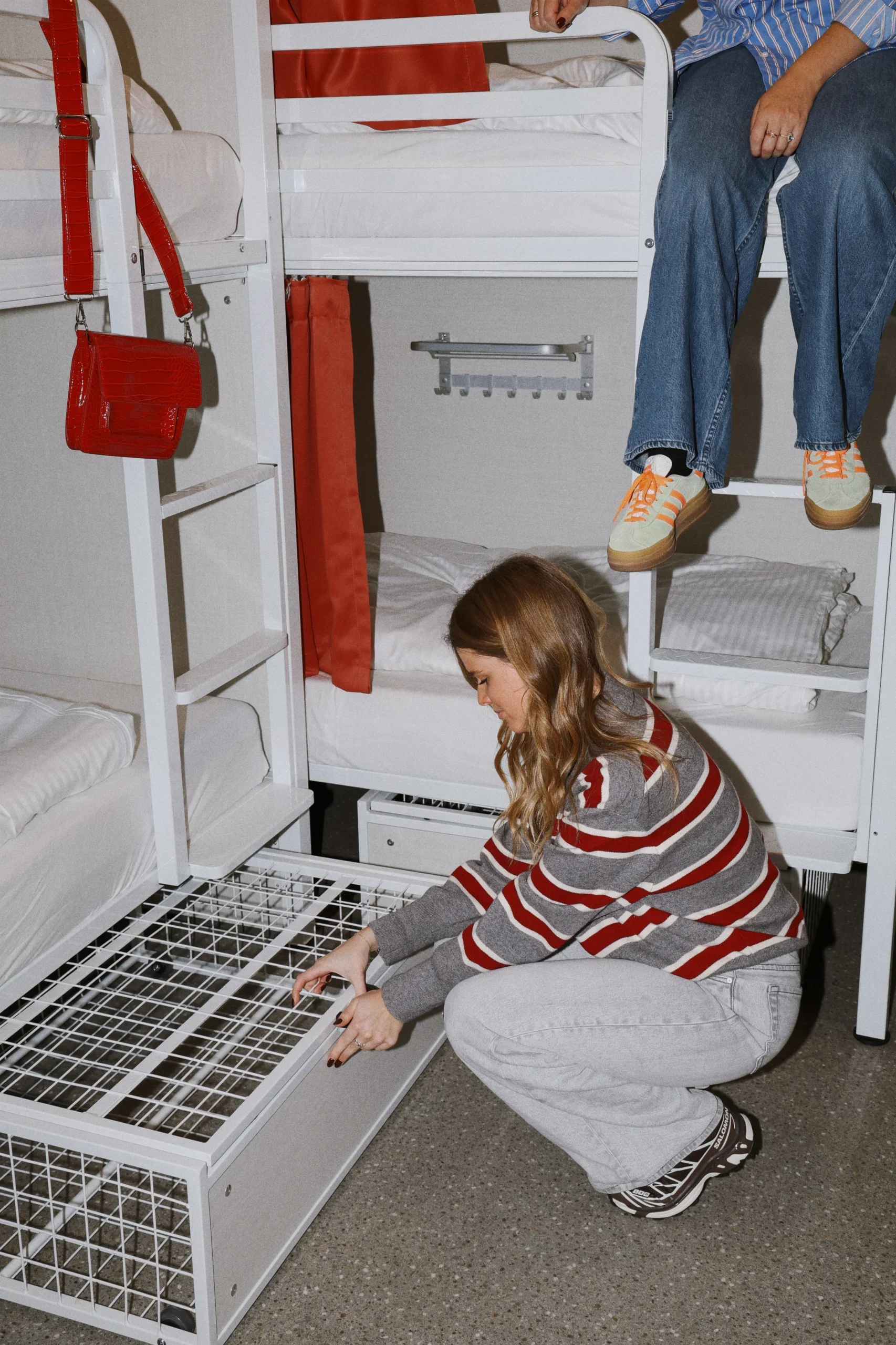
Choose from dorms, twin or double rooms and private rooms. Check the exact set-up before booking.
Your ultimate guide
A hostel is a place to sleep, cook, meet people, and be somewhere. Usually cheaper than the alternatives. Sociable if you want it to be, quiet if you don’t.
The quick version
Hostels are straightforward once you know what varies - and what is always your choice.
Choose from dorms, twin or double rooms and private rooms. Check the exact set-up before booking.
Common rooms and kitchens make it easy to meet people, but sociability is never compulsory.
Use the locker provided and bring a padlock rather than assuming the hostel supplies one.
Arrival, check-in, checkout and reception hours vary, so confirm them before you travel.
ID, age policies, city taxes and quiet hours can differ by destination and property.
Hostel staff know the building and the neighbourhood. If something is unclear, ask.
Where you’ll sleep
You’ve got options. Mix it up if you like: a dorm for the first two nights, a private room after.
Shared with other travellers, from four beds up to sixteen. Often the lowest-cost option and the easiest place to meet people.
A room for two when you are travelling together and want more privacy without losing the hostel around you.
Your own bed and room, sometimes with your own bathroom. Useful when sleep or personal space matters most.
Shared-space field guide
Many HI hostels have a shared kitchen. It’s usually the busiest room in the building.
A living room, bar, courtyard or roof terrace gives you somewhere to gather at the end of the day.
Pack the useful things
You do not need specialist kit. A few practical extras make shared spaces easier—check the listing first, because what is included varies by hostel.
Keep the documents you need for check-in easy to reach.
Bring one rather than assuming the hostel supplies it; check the listing if you need the lock type.
Small insurance for a shared dorm night.
A quick-dry towel packs small and is useful when hire is not available.
Easy to refill and carry through the day.
Bring the adaptor your destination needs and label chargers in shared rooms.
Useful for shared showers and carrying toiletries without a juggling act.
For calls, music and late-night scrolling without sharing the soundtrack.
Label anything you leave in a shared kitchen.
Linen, towels, toiletries, lockers and kitchen equipment vary by property. The hostel listing is the final word on what is provided.
How to be in a dorm
Do that, and you’ll be a great dorm-mate.
Mention it to the others so they know to expect your alarm.
Place the morning essentials within reach instead of sorting everything in the dark.
Use the bunk curtain and individual reading light if you have them.
Use headphones and take calls outside sleeping areas.
Arriving and leaving
Times vary by hostel, so check the property details rather than relying on a universal rule.
Room, facilities, location, access, check-in window and cancellation conditions.
Check-in usually opens in the afternoon; reception may be able to hold your bag until the room is ready.
You’ll usually get a key or keycard, locker information and a rundown of the kitchen, exits and quiet hours.
Checkout is usually mid-morning. Return keys, clear labelled food, check the locker and ask about later bag storage.
If it’s your first time
Ask the staff anything. They’ve answered the question already this week. Everyone is either in your shoes or has already been there; hostels are friendly environments and people tend to look out for each other.
A small card. A big network.
HI membership opens up over 2,000 hostels in more than 50 countries, with member rates wherever you stay and a hand in the charity behind it all.
Ihre Einstellungen
Personalisieren Sie Ihren Besuch
Wir verwenden essenzielle Cookies, um den Betrieb der Website zu gewährleisten, sowie optionale Analytik-Cookies, um zu verstehen, wie die Website genutzt wird, und um das Nutzererlebnis zu verbessern.
Bitte geben Sie an, welche Kategorie am besten auf Ihren Besuch zutrifft, damit wir Ihnen die relevantesten Inhalte anzeigen können.

Analytik-Cookies
Wir verwenden essenzielle Speichertechnologien, um den Betrieb dieser Website zu gewährleisten und Ihre Einstellungen zu speichern. Analytik-Cookies sind optional. Wenn Sie diese zulassen, nutzen wir sie, um zu verstehen, wie Besucher die Website nutzen, und um das Nutzererlebnis zu verbessern.